Wild garden thinking
The term wild thinking originates with anthropologist Claude Lévi-Strauss, who described it as a form of knowledge that is intuitive, improvisational, and rooted in the sensory and symbolic — in contrast to structured, scientific reasoning. In the garden, wildness follows its own kind of intelligence. I take this as both a metaphor and a method.
But what do we need? Structure or chaos? Or both — woven together? New seeds?
We are living in a time when we know that our old ways of thinking, of approaching, understanding, and constructing knowledge are shifting.
Technical developments like AI, the rise of social media, and increasingly blurred realities show us that binary systems no longer suffice.
But how can we still make sense of the world? How can we ask questions that help us orient ourselves?
Wild Garden Thinking is an attempt — a practice for this moment. A place to begin.It is a post-disciplinary practice — composting theory, memory, movement, failure, and care. It does not aim to control knowledge, but to cultivate spaces where new seeds may emerge — slowly, unexpectedly, and in relation.
Let the garden grow!
Referenced Thinkers:
- Claude Lévi-Strauss – The Savage Mind (1962)
- Gilles Deleuze & Félix Guattari – A Thousand Plateaus (1980)
- Donna Haraway – Situated Knowledges (1988)
- Bruno Latour – We Have Never Been Modern (1991)
- Francisco Varela, Evan Thompson & Eleanor Rosch – The Embodied Mind (1991)
- António Damasio – Descartes’ Error (1994)
- Tim Ingold – The Perception of the Environment (2000)
- Anna Tsing – The Mushroom at the End of the World (2015)
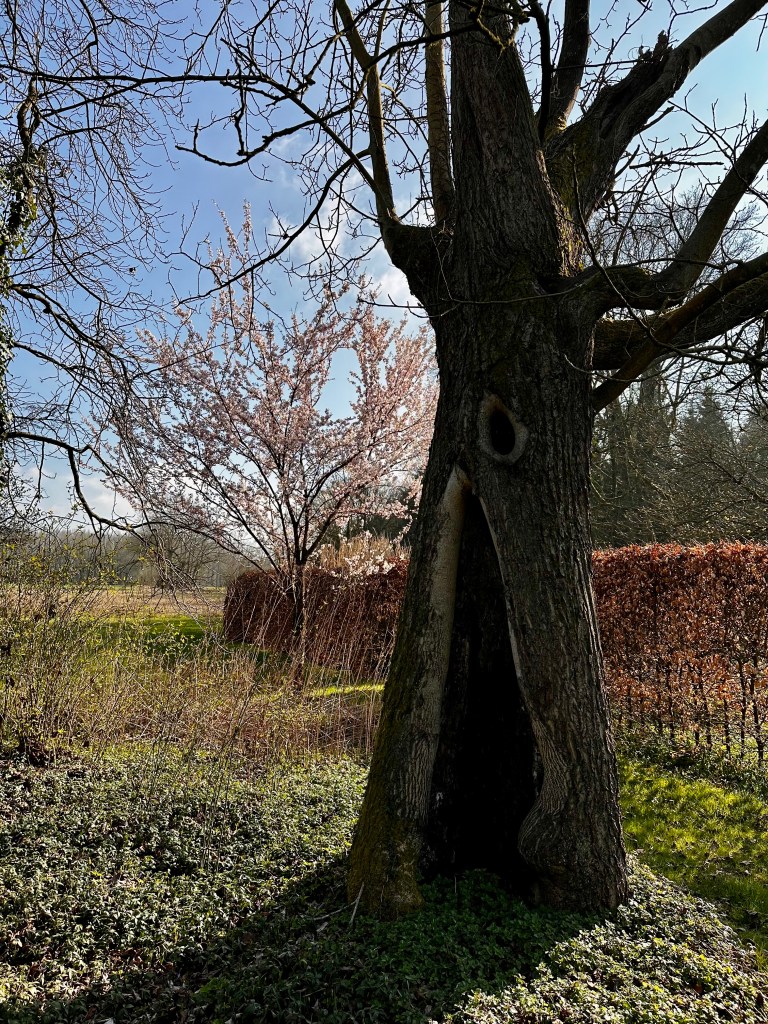
What do you see?
 MW
MW 